





 |
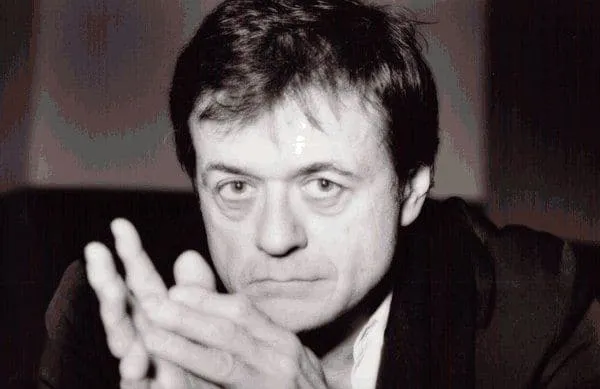
| Filmmaker Patrice Chéreaun at the French Film Festival UK in 1998 - 'I get the sense that I'm more appreciated abroad than I am at home.' Photo: Lloyd Smith |
He is perhaps best known in film for Queen Margot (La Reine Margot), his sumptuous epic of the conflict between Catholics and Protestants in 16th century France which scooped many awards including five Césars (French Oscars) as well as an Oscar nomination. The restored version of the film was shown earlier this year at the Cannes Film Festival.
In opera, his Bayreuth production of Wagner's four-opera saga The Ring Cycle caused controversy in the ranks of the public and the critics alike, but Chéreau always took comfort from the fact that his visions stirred strong feelings of whatever persuasion.
He told me once: "I get the sense that I'm more appreciated abroad than I am at home. I have been around for a long time, so perhaps after 30 years or so I am beginning to bore people."
His own boredom threshold was low, which resulted in a career that has cut across boundaries, frequently to the annoyance of the critics. They appeared to disapprove of such versatility.
He directed his first professional play in 1964 (L'Intervention by Victor Hugo) when he was 20. Five years later he had directed his first opera (Rossini's L'Italienne a Alger), and in 1974 his first film (Flesh And The Orchid/La Chair de l'Orchidee, from a novel by James Hadley Chase). He brought a two-hander Solitude Of The Cotton Fields by Bernard-Marie Koltes in which he acts and directs - (with Pascal Greggory who played Anjou in Margot) to the Edinburgh International Festival. He came to Scotland on another occasion with his film Those Who Love Me Can Take the Train as part of the 1998 French Film Festival UK.
Chéreau knew Koltes, who died in 1989 of Aids, aged 41, at the peak of his creative powers. He was the first person to recognise and espouse Koltes's work, staging productions when he was director of the pioneering Theatre des Amandiers in Nanterre, a bleak suburb of Paris.
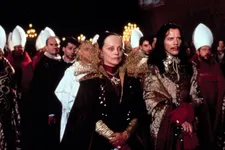 |
| Virna Lisi and Pascal Greggory in Pascale Chéreau's Queen Margot |
His most autobiographical film, The Wounded Man (L'Homme Blessé) (1983), was garlanded with awards. "It was my life, absolutely. First, because it talks about homosexuality, and secondly because it dealt with the deep sadness of adolescence. What interested me was that homosexuality was never explained – it is a fact of life, that's all, and that's how I like it. The film was ahead of its time and came out of a ghetto."
Chéreau has not always been so rapturously received. When La Reine Margot was screened at Cannes it received a frosty reception, particularly from the French critics. After the furore died down, he took a cool look at the film again, and tightened the narrative by recutting some parts. The experience convinced Chéreau that his place was in cinema, despite the fact that people kept telling him his films were too theatrical or overly operatic. He appreciated the notion that with a camera he could prowl around and get close to his actors. "For 20 years I have been removed from them by being in the stalls while they're up on stage. The movies give that physical density that theatre cannot bring," he once suggested.
In 2001, Chéreau helmed his only English-language film, the sexually explicit Intimacy, written by Hanif Kureishi, which won the Berlin Golden Bear award. His last work for the cinema was Persecution in 2009 which had two remarkable performances by Charlotte Gainsbourg and Romain Duris.
Chéreau was born in Lezigne in the Loire, but the family moved to Paris when he was five. With a painter father and a designer mother he grew up in Bohemian circles. He recalled his first stirrings of interest in the theatre, aged 12. "I had no ambitions to be an actor, but once I found out that there was someone who pulled everything together as a director, I wanted to be that person."