





 |
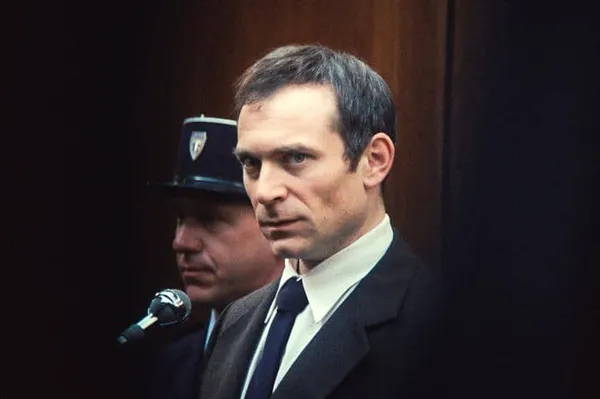
| Cédric Kahn on The Goldman Case: 'I see the audience as being a kind of jury. I want them to ask where the truth lies. That was the most important thing for me' Photo: Moonshaker |
Cédric Kahn, who’s also an actor, is back in Cannes with The Goldman Case 22 years after Roberto Succo (the true story of an Italian serial killer) was presented in Competition. This time he is dealing with a complex judicial case revolving around Pierre Goldman, a far left militant, who became a cause celebre in the Seventies.
During his first trial he was sentenced to life in prison for four armed robberies during which two chemists died. He protested his innocence regarding the deaths claiming he was with a friend at the time.
Goldman, recalls Kahn, became an icon for the intellectual left with the prospect at the time, in 1975, of the death penalty if proved guilty. Simone Signore and Jean-Paul Sartre were among those who supported him.
Kahn says there was no particular impetus for the film. “There was always ambiguity and mystery surround him. In France we are fascinated with unresolved court cases. Do I think he was innocent or guilty? My opinion doesn’t matter but I see the audience as being a kind of jury. I want them to ask where the truth lies. That was the most important thing for me.”
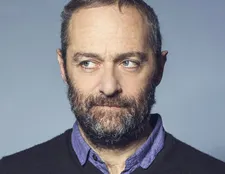 |
| Cédric Kahn: 'I am not blaming everyone. There is deep racism in societies all over the world' Photo: UniFrance |
As a youngster he recalls his Leftist intellectual parents talking about the case and the book that Goldman wrote about it which informed much of the script, was prominent on the bookcase at home. When he was older he read it and became fascinated by the way that the truth “goes round and round”.
The subject of racism is raised in the arguments put by Goldman’s lawyer. Kahn agrees that some police at the time might have been racist. “I am not blaming everyone. There is deep racism in societies all over the world. We are not willing welcome other people who are different from us and whom we do not know. It will need a lot of education to change things. Anti-semitism is more complex. I think it is more difficult to be a Muslim in France.”
He wanted to focus the film on “the power of words. The facts are clear but the problem is to understand whether it was him or not.”
On the choice of Belgian actor Arieh Worthalter to play Goldman, Kahn responded to his energy and intensity. “He had the physicality for the part, and also the intellectual heft. It didn’t really matter that he did not look exactly like him - the real Goldman was much darker skinned than Arieh.”
It was shot in chronological order in documentary style. “We wanted it to feel as real as possible and the actors had to respond to the reactions of the crowd in the courtroom,” he said.
The chaotic scenes in the court with a cacophony of voices shouting at each other was reasonably accurate although he admits he may have embroidered it slightly for dramatic effect. “The first court case was conducted in a sober and disciplined way and he was found guilty. In the second one everyone was talking at the same time, and he was acquitted. It partly depends on the personality of the judge. I would describe Goldman as a punk who liked nothing better than to provoke.”
Kahn hopes that the film will become a talking point for a whole new generation. “There were many young people around on the set as part of the crowd and they became very passionate about it.”
The Goldman Case opened the Directors’ Fortnight at the Cannes Film Festival